Table of Contents
Cyber security services for small businesses are no longer optional; they're required to stay operational, competitive, and protected in today's threat landscape.
Small businesses face the same sophisticated cyber attacks as large corporations, without the security infrastructure, expertise, or budget to match.
That gap is exactly where cybercriminals strike. Your business data, client information, and daily operations are all at risk.
Threats have grown more aggressive, more automated, and more costly every year. A single ransomware attack can lock your team out of critical systems for days. A data breach can trigger regulatory penalties and destroy client relationships built over years.
Many small businesses that experience a serious attack never fully recover. Prevention is faster, cheaper, and less disruptive than recovery.
Effective cybersecurity demands the same strategic thinking enterprise organizations apply, layered defenses, proactive threat detection, defined security policies, and solutions that scale with the business
A dedicated security leader, 24/7 SOC monitoring, and certified endpoint protection are the baseline for operating safely in a world where attackers are constantly probing for weaknesses.
That's why cybersecurity services for small business built around a proactive, enterprise-grade model matter so much.
For over 27 years, Umetech has delivered that to SMBs across Temecula and Southern California, including endpoint protection, managed detection, compliance management, and cloud security, all backed by the depth of a seasoned cybersecurity company and the personalized approach smaller businesses deserve.
Cybersecurity for Small Businesses: Why It's No Longer Optional
Small businesses are not flying under the radar of cybercriminals. Malicious actors prefer to target small businesses because weaker defenses, limited security budgets, and fewer IT staff make them easier to breach than large enterprises. A business with 20 employees and no dedicated security team is a simpler target than a corporation running a 24/7 Security Operations Center.

Small and Medium Businesses Face the Same Threats as Big Enterprises
The cyber threats aimed at small and medium businesses are identical to those hitting Fortune 500 companies. Phishing campaigns, ransomware attacks, network intrusions, and data breach attempts do not scale down based on the size of the victim. What scales down is the victim's ability to detect them, respond to them, and recover from them.
Same attack tools, different defenses
Malicious actors use the same automated attack tools against a 10-person business as they do against a 10,000-person enterprise. The difference is that big enterprises have dedicated teams to catch and contain those attacks before they cause serious damage.
No incident response plan
Most small businesses have no incident response plan in place before a cyber attack occurs. When an attack hits, decisions are made reactively under pressure, which almost always makes the outcome worse.
No around-the-clock security leader
Most SMBs have no dedicated security leader monitoring their environment around the clock. Threats that could be caught and contained in minutes go undetected for hours or days.
Common entry points
Weak or reused passwords, unpatched systems, and unprotected mobile devices are among the most frequently exploited vulnerabilities in small and medium businesses. Malicious actors scan for these weaknesses at scale and attack them constantly. Without the resources that big enterprises rely on, a single cyber attack can push a small business into a crisis it is not equipped to manage.
The Real-World Impact of a Cyber Attack on Small Business Data and Operations
A ransomware attack can lock your entire team out of critical business data for days or weeks at a time. Operations stop. Client work stalls. Revenue disappears. The financial damage from even a short period of forced downtime can be severe for a business operating on tight margins.
Regulatory fines and compliance penalties
A data breach that exposes sensitive data can trigger fines under HIPAA, PCI-DSS, and NIST. These penalties are applied regardless of company size and can reach tens of thousands of dollars from a single incident.
Legal liability and exposure
When client or employee sensitive information is compromised, legal liability follows. Small businesses often lack the legal infrastructure to manage these claims efficiently, making the financial exposure significantly worse.
Loss of client trust
Public disclosure of a data breach damages client trust in ways that take years to repair, if they are repaired at all. Long-standing business relationships built over years can end quickly when clients feel their data was not protected.
The total cost of a data breach, downtime, legal fees, regulatory fines, remediation, and reputational damage, almost always exceeds what proper cyber security services for small business would have cost over several years of protection.
Reactive Security System Is No Longer Enough
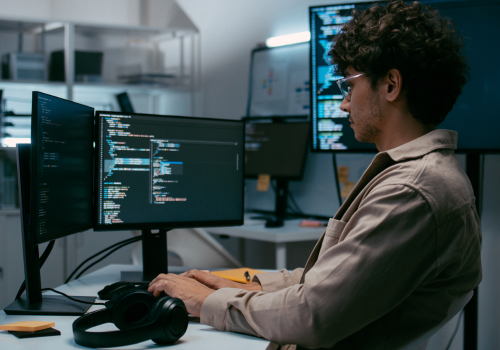
Waiting for a cyber attack to reveal the gaps in your defenses is a liability. The break-fix model leaves small businesses exposed during the most critical window: before the attack is detected. Effective cybersecurity for small businesses is proactive, layered, and continuously managed, endpoint protection on every device, 24/7 threat detection, enforced security policies, and a partner actively stopping threats before they reach your systems.
The cost of proactive SMB cybersecurity is a fraction of the cost of recovering from an attack that could have been prevented. A documented cybersecurity strategy that protects business data and strengthens your compliance posture before an incident occurs is not a luxury, it is an operational requirement.
The Most Common Cyber Threats and Cyber Attacks Targeting Small and Medium Businesses
Small and medium businesses are dealing with a threat environment that grows more aggressive every year. Cyber attacks often constant, automated, and designed to hit as many vulnerable businesses as possible in the shortest amount of time. Understanding the specific cyber threats that target SMBs is the first step toward building a defense that can prevent threats before they disrupt operations.
Phishing and Social Engineering
Malicious actors send deceptive emails impersonating trusted sources, a bank, a software vendor, a colleague, to trick employees into clicking malicious links, entering credentials, or downloading malware.
Email and collaboration tools like Microsoft Teams, Slack, and shared drives have become primary delivery channels, making these attacks harder to spot at a glance.
Ransomware Attacks
A ransomware attack works by deploying malicious programs that encrypt a business's files and systems, making them completely inaccessible. The attacker then demands a ransom payment in exchange for the decryption key. Until that key is provided, or a clean backup is restored, the business cannot access its own business data, cannot serve clients, and cannot operate normally.
No single measure eliminates the threat. Layered protection is what keeps businesses operational when an attack attempt is made.
Data Theft and Unauthorized Remote Access
Data theft occurs when malicious actors gain access to a business's systems and extract sensitive information, client records, financial data, login credentials, intellectual property, or any other business data with value.
In many cases, the business does not know the theft has occurred until the data appears somewhere it should not be, or a client reports suspicious activity involving their information.
Legal liability follows when client-sensitive information is compromised. The loss of client trust that comes with a publicly disclosed breach is often the longest-lasting and most difficult consequence to address.
Insider Threats and Privilege Misuse
Insider threats, whether from a current employee, a former staff member, or a third-party vendor with system access, represent a significant and frequently underestimated risk for small and medium businesses. The danger is that insiders already have legitimate access to systems, which makes their activity harder to flag as suspicious activity without proper monitoring in place.
Combining that with suspicious activity monitoring, regular access audits, and a formal offboarding process that immediately revokes system access creates a layered defense against threats that originate from inside the organization.
Core Cybersecurity Solutions and Cybersecurity Services Every Small Business Needs

Small businesses tend to lack clarity on what cybersecurity services for small business must include. Generic antivirus software and a basic firewall are not enough to defend against the cyber threats targeting SMBs today. A complete security posture must protect devices at every endpoint and secure identities across every user account in the organization.
Effective cybersecurity services require a set of layered, continuously managed security solutions that cover every part of the business, devices, email, cloud environments, data, and human behavior. The following cybersecurity solutions are the core building blocks of a defensible small business security posture.
Endpoint Protection and Endpoint Detection and Response (EDR)
Every device connected to your business network is a potential entry point for a cyber attack. Desktops, laptops, and mobile devices used for remote access all represent exposure if they are not actively protected and monitored. Endpoint protection is the baseline, it prevents known threats from executing on a device. Endpoint detection and response go several steps further.
Managed Detection and Threat Detection
Having security tools in place is not the same as having someone actively watching for threats. Managed detection is the service layer that ensures continuous threat detection is happening around the clock, even when your internal team is not available to monitor it.
For small and medium businesses, access to SOC-level threat detection through a managed service is the most cost-effective way to achieve enterprise-grade security coverage without hiring a full internal security team.
Cloud-Based Security and Cloud Apps Protection

The majority of small and medium businesses now rely on cloud apps and SaaS platforms for core IT operations, email, file storage, accounting, communication, and project management. Each of those platforms is an access point that requires its own layer of cloud-based security to keep business data protected.
Combining IAM with multi-factor authentication ensures that even if a credential is compromised, unauthorized access is blocked. Every user in your organization should have privilege access only to what their role specifically requires, nothing more.
Secure Email and Collaboration Tools
Email and collaboration tools are the most heavily used, and most frequently attacked, surfaces in any small business environment. Phishing, malware delivery, and data theft all commonly begin with a message in someone's inbox. Secure email configuration is one of the most direct ways to reduce the volume of threats that ever reach your employees in the first place.
Encrypting email communications and files shared through collaboration tools ensures that sensitive information cannot be intercepted and read, even if it is captured in transit. Encryption is a foundational control that protects business data at every point it moves through your systems.
Backup Data and Disaster Recovery
No set of cybersecurity solutions is completely impenetrable. A tested backup data strategy is what separates a business that recovers quickly from a ransomware attack from one that loses weeks of productivity and potentially irreplaceable business data. Backups are the last line of defense when every other control has been bypassed.
For small and medium businesses, having a plan documented and tested before an incident occurs is the difference between a manageable disruption and a crisis.
Cybersecurity Tips to Keep Your Temecula Business Safe From Cyber Attacks
Implementing the right cybersecurity controls does not have to be complicated. Many of the most effective cybersecurity tips for small businesses come down to consistent execution of proven fundamentals.
The following actions address the most commonly exploited weaknesses in SMB cybersecurity and can be applied regardless of the size or technical maturity of your organization. Each one reduces real, measurable cybersecurity risk.
Enable Multi-Factor Authentication on All Accounts
Multi-factor authentication requires users to verify their identity through a second method, a code sent to a phone, an authenticator app, or a hardware key, in addition to their password. It adds an extra layer of protection that stops the majority of credential-based cyber attacks, even when a password has already been compromised.
Multi-factor authentication blocks access even when the password is correct. It is one of the highest-impact cybersecurity tips available and one of the lowest-cost controls to implement.
Regularly Back Up Data and Verify Restorations
Backing up business data is only useful if the backups actually work when they are needed. Many small businesses run automated backups but never test whether the data can be restored. A backup that fails during a ransomware attack recovery does not protect at all.
Restoration tests should be conducted at regular intervals to confirm that the backup data is intact and recoverable.
Apply Patch Management Consistently
Software vulnerabilities are discovered constantly. Developers release patches to fix them. When those patches are not applied swiftly, businesses leave known entry points open for malicious actors to exploit. Patch management is the process of keeping all systems, software, and devices current with the latest security updates.
Consistent patch management across all devices, including mobile devices, servers, and third-party applications, removes these known entry points before they can be exploited. It is one of the most straightforward cybersecurity tips and one of the most consistently neglected in small and medium businesses.
Train Employees to Recognize Suspicious Activity

Technology controls alone cannot stop every cyber attack. Employees are the first line of defense, and the most frequently exploited entry point. Those who can identify suspicious activity, spot phishing attempts, and respond correctly turn human behavior from a vulnerability into an active layer of protection.
Security awareness training turns the most commonly exploited vulnerability, human behavior, into an active layer of protection.
Training should cover phishing identification, secure handling of sensitive information, and clear escalation paths when something looks wrong. Phishing simulations reinforce those lessons with practical experience, employees who have encountered a realistic attempt in a controlled setting are significantly better at catching real ones.
Cyber Security Services in Temecula: How Umetech Protects Small Businesses
Umetech has delivered cybersecurity services to small and medium businesses across Temecula and Southern California for over 27 years.
The team includes CISSPs, vCIOs, and project management experts, enterprise-grade depth, without the overhead of an internal security department. Help Desk response averages under 5 minutes, and flexible engagements with no surprises on pricing. Clients stay because the results are consistent and measurable.
If your business is ready to move from reactive to proactive cybersecurity services, Umetech is ready to help, starting with a clear picture of where your current environment stands.
Get Your Free Network & Cybersecurity Assessment and work with a team that has spent decades keeping Southern California businesses secure, operational, and protected against the cyber attacks that are becoming more frequent every year.
Frequently Asked Questions
Why is cybersecurity for small businesses important?
Small businesses are among the most frequently targeted victims of cyber attacks precisely because they hold valuable business data and sensitive information while operating with far fewer defenses than large corporations. A single data breach or ransomware attack can halt operations, trigger regulatory fines, and permanently damage client relationships.
What is the impact of cyberattacks on small to medium-sized businesses (SMB)?
A successful attack can result in days or weeks of downtime, loss of sensitive data, compliance penalties under frameworks like HIPAA and PCI-DSS, legal liability, and lasting reputational damage.
What should small businesses look for in a cybersecurity company?
A reliable cybersecurity company should offer a proactive approach to threat detection and SMB cybersecurity management. Look for certified professionals such as CISSPs on staff, experience serving small and medium businesses specifically, transparent pricing with no hidden costs, and scalable solutions that grow alongside your business.
How do I secure my small business network?
Securing your small business network starts with the fundamentals: enable multi-factor authentication on all accounts, enforce strong passwords and unique passwords across every system, apply consistent patch management to close known vulnerabilities, deploy endpoint protection on every device, including mobile devices, and implement cloud-based security across all cloud apps and remote access points.
What is the 80/20 rule in cybersecurity?
The 80/20 rule in cybersecurity refers to the principle that roughly 80% of cyber attacks exploit just 20% of known vulnerabilities. For small businesses, this means that consistently applying a focused set of core controls, patch management, multi-factor authentication, endpoint detection and response, secure email, and backup data, addresses the vast majority of real-world cyber threats without requiring an unlimited budget.