Table of Contents
Cyberattacks are not slowing down, and most small businesses in Temecula lack the in-house resources to keep pace. New cybersecurity threats emerge weekly, compliance demands grow every year, and stretched internal teams have little room left for security. One misconfigured firewall can turn a normal Tuesday into a six-figure fraud attempt.
A dedicated cyber security consultant solves this. For Temecula owners who want to protect their networks and stay compliant, the work covers risk assessments, layered network security, secure cloud migration and management, and an incident response plan ready before it is needed.
Umetech treats security as the foundation of every engagement. Monitoring software alone cannot stop an attacker. A consultant who understands your environment and compliance requirements can.
Umetech has built this reputation over 27+ years in Temecula. Local businesses get enterprise-grade security from a team that answers the phone in under five minutes.
Whether the goal is passing a compliance audit or sleeping better at night, the right cybersecurity consultant turns security into a solved problem.
What Does a Network Security Consultant Do?
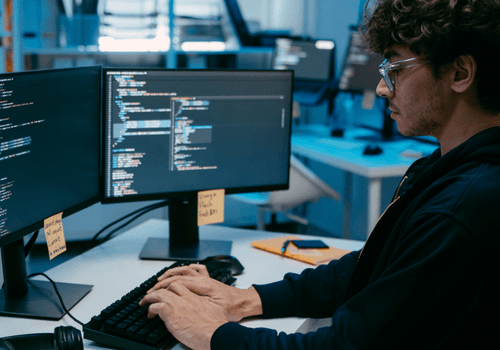
A cyber security consultant keeps a business ahead of threats. That work covers four core areas.
First, the consultant helps assess the organization's environment and risk across every system a company relies on. Second, they identify vulnerabilities before an attacker finds them. Third, they develop security strategies and implement controls suited to the actual risk level, not a generic template. Fourth, they manage the security posture on an ongoing basis because a network that was secure last quarter isn't automatically secure today.
A cybersecurity consultant does far more than patch problems as they surface; they build a system where risk is understood, controls are in place, and the business's security posture keeps improving instead of quietly falling behind.
How Cyber Security Consultants Assess Risk and Identify Vulnerabilities
A security consultant starts by mapping out where a business is exposed by reviewing the network architecture. It means checking firewall settings and access permissions and using vulnerability scanning to evaluate weaknesses in outdated software or unpatched systems. The goal is a clear, honest picture of where the risk sits.
Network Topology Review
The consultant examines how devices, servers, and connections are laid out across the business. This surfaces weak points that might otherwise go unnoticed for years.
Firewall and access control checks
Every firewall rule and user permission gets evaluated against what the business actually needs. Loose or outdated settings are flagged for correction.
Outdated Software Identification
Systems running old versions or missing patches are logged and prioritized. These gaps are often the easiest entry point for an attacker.
Findings Report with Clear Priorities
All results get compiled into a report ranked by urgency. This gives the business a roadmap instead of a long, confusing list of problems.
That report becomes the foundation for everything that follows. Without it, a business is guessing at what needs attention. With it, every fix has a reason behind it and reflects the consultant’s ability to identify and prioritize vulnerabilities accurately.
How Consultants Implement Security Controls and Ongoing Oversight
Finding problems is only half the job. A cyber security consultant also puts real security measures and appropriate security controls in place to close those gaps. This can include endpoint protection, access management policies, and monitoring tools that catch suspicious activity early. Once those controls are live, the work doesn't stop. Threats evolve, so the consultant keeps adjusting the defense to match.

Endpoint Detection and Monitoring
Devices across the business get equipped with tools that watch for unusual activity in real time for threat detection. This catches threats before they spread further into the network.
Access Control by Role
Employees receive system access based only on what their job requires. This limits the damage a single compromised account can cause. Employee training is also part of ongoing oversight, since many security incidents start with human error.
Patch and Update Management
New patches and updates are applied as soon as they're available, not weeks later. This keeps known vulnerabilities from sitting open and exploitable.
Regular Posture Review
The consultant checks the entire security setup on a set schedule, not just when something breaks. This keeps defenses current as the business and its risks change.
This ongoing management is what separates a one-time fix from a real security program. A business protected today stays protected because someone is watching tomorrow, too.
What's the Difference Between a Cyber Security Consultant and General IT Support?
General IT support exists to keep the day-to-day running. It handles password resets, software installs, printer issues, troubleshooting, and technical support. A cyber security consultant does something different by focusing on reducing security risk.
Reactive vs Proactive Work
IT support typically responds to issues after employees report them. A security consultant actively searches for weaknesses before they cause a problem.
Scope of Responsibility
IT support manages devices, software, and everyday technical requests. A security consultant manages the business's overall exposure to cyber attacks and compliance risk.
How Success is Measured
IT support is judged by how quickly a ticket gets resolved. A security consultant is judged by how well the business avoids a breach in the first place and by how clearly risks and recommendations are explained in business terms.
Both roles matter, but only one of them is built to stop a breach before it happens.
Understanding Umetech's Core Cybersecurity Services

Umetech builds its cybersecurity work around four practical areas, each one solving a specific piece of the risk puzzle. Together, they form a complete approach to protecting a business's systems, data, and daily operations. The sections below break down what each one actually includes.
Risk Assessment and Security Testing
Risk assessment starts the process by identifying where a business is most exposed across its systems and information systems. Security testing then confirms whether existing defenses hold up under real conditions. Risk management defines the roles and methodology used to handle identified risks. Between the two, a business gets a factual picture of its current risk level instead of relying on assumptions. This groundwork also reinforces the cybersecurity fundamentals every other service depends on.
Results from the assessment get recorded as a baseline for future comparison. This makes it possible to track whether security is actually improving over time.
Cloud Security and Firewall Protection
As more businesses move operations to the cloud, cloud security becomes just as important as protecting the physical network. Umetech pairs cloud protection with strong firewall management and application security, so both the perimeter and the cloud environment stay covered. This combination closes gaps that often appear when the two are handled separately.
When a business moves data or applications to the cloud, the transition happens with security controls in place from the start and aligned with broader digital transformation goals and existing technology requirements. This avoids the exposure that comes from migrating first and securing later.
Incident Response and Post-Incident Analysis
Even strong defenses can't guarantee zero incidents, so incident response planning prepares a business for the moment something does go wrong. Fast, organized action limits the damage. Afterward, post-incident analysis and digital forensics help determine what happened and make sure the same issue doesn't happen twice. Once an incident is resolved, the response team reviews exactly what happened and why.
Access Management and Data Backup
The last layer of protection focuses on two things: controlling who can reach sensitive systems and making sure data survives if something goes wrong anyway, with data loss prevention supporting both access management and backup. Both pieces directly support a business's overall security posture and can help a business avoid fines tied to breaches or exposed data.
Together, these four service areas give a business coverage across the entire security lifecycle, from spotting risk to recovering from an incident. No single tool or policy replaces the need for all four to work in sync.
Information Security & Compliance Governance

How Risk Management Determines Which Rules Apply
Risk management decides which rules apply to a business, and figuring that out takes more than a guess. The consultant looks at three things. Industry classification often sets the baseline regulatory framework before anything else is considered, since a healthcare provider and a car dealership start from very different requirements. Data type and sensitivity matter just as much, because patient records, payment card data, and public infrastructure data each carry their own handling rules that shape which controls are mandatory. Operational footprint, meaning how many locations, vendors, and systems a business touches, determines how far those obligations extend. Map those three factors and the applicable framework becomes clear instead of assumed.
How This Framework Applies Across Umetech's Clients
Umetech already applies this process across several regulated industries, and the framework changes with the client. Healthcare providers fall under HIPAA, which governs how patient data gets stored, accessed, and transmitted, so controls focus on protecting medical records from unauthorized access. Automotive dealerships face data protection expectations tied to customer financial and personal information, with controls built around preventing unauthorized access and protecting brand reputation. Financial services firms operate under PCI DSS, which sets strict requirements for payment card data, so network security and access controls are built specifically around that standard. Water districts and public utilities answer to frameworks like NIST and CMMC alongside public accountability standards, balancing strict security requirements with budget constraints and community trust.
In every one of these cases, the compliance requirement is the reason the security work is structured the way it is. A cyber security consultant who understands the technical controls and the regulatory framework behind them is what turns compliance from an annual scramble into something a business can maintain.
Why Certified Expertise Backs Every Umetech Engagement
Certifications matter because they prove the depth behind the work. Umetech's security engagements are led by CISSP-certified specialists, the same credential expected of security leaders at large enterprises. These specialists run the risk assessments, review each client's environment in detail, and steer the long-term security posture rather than handing off a report and moving on.
That credential gets paired with broad knowledge of risk management, threat detection, and security controls, the skills needed to assess real-world environments rather than run a checklist. Through Umetech's Virtual CIO approach, findings don't stay locked in technical language. They get translated into decisions a business owner can actually act on, whether that means prioritizing a budget line, adjusting a vendor contract, or timing a system upgrade around real operational constraints.
Cyberattacks change constantly, and so do the compliance requirements tied to HIPAA, PCI DSS, NIST, and CMMC. A certification earned five years ago doesn't guarantee readiness for a threat that emerged last month. That's why Umetech's team treats learning as a continuous requirement, not a one-time milestone, staying current so the security controls a client relies on today keep working against tomorrow's threats, not just the ones that were relevant when the assessment was first written. Schedule a free quote today for your business safety.
Why Temecula Businesses Choose Umetech Cyber Security Professional Services

Umetech has spent over 27 years delivering enterprise-level security to Temecula businesses that larger national providers tend to pass over. Big firms often focus on big contracts, leaving small and medium-sized businesses with generic solutions or long wait times when something goes wrong. Umetech built its practice around exactly the businesses that fall through those cracks, bringing the same caliber of security architecture and technical skills used by finance and healthcare enterprises down to a scale that fits a growing local company. It also supports customers through complex IT infrastructure initiatives with steady project management. That experience comes from decades of solving information technology security problems for real businesses in the same region, again and again.
That local commitment shows up most clearly in response time. Umetech maintains a service level average under five minutes, meaning a security issue gets expert attention right away instead of sitting in a support queue behind dozens of other tickets. When a suspicious login or a flagged vulnerability shows up, minutes matter. A slow response can turn a contained issue into a full incident. Fast, direct access to the right expertise closes that window before it becomes a problem.
Frequently Asked Questions
What does a cyber security consultant do?
A cyber security consultant assesses risk across a business's systems, identifies vulnerabilities, implements security controls suited to that risk level, manages the security posture on an ongoing basis, and handles multiple tasks across a client's environment at once. Rather than reacting to problems as they happen, the consultant works to prevent breaches before they occur and keeps defenses current as new threats emerge.
What is the difference between a cyber security consultant and an IT support provider?
IT support has different skill sets and handles day-to-day technical needs like password resets, software installs, and hardware issues, responding mainly after something breaks. A cyber security consultant focuses specifically on threat prevention, risk reduction, and compliance, actively searching for weaknesses before they turn into incidents.
What industries need a cybersecurity consultant the most?
Industries handling sensitive data or operating under strict regulation benefit most, including healthcare, financial services, automotive, and public sector organizations like water districts. Each of these industries carries specific compliance requirements, such as HIPAA or PCI DSS, that make dedicated security expertise essential rather than optional.
What certifications should a cyber security consultant have?
CISSP is one of the most recognized credentials, signaling the same level of expertise expected of security leaders at large enterprises. Beyond certification, ongoing training matters just as much, since threats and compliance requirements change faster than any single credential can keep up with on its own.
How do I know if my business needs a risk assessment?
If a business has never had its network, cloud environment, security tools, or access controls formally reviewed, a risk assessment is overdue. Warning signs include outdated software, unclear access permissions, upcoming compliance audits, or simply not knowing where the business currently stands on security.