Table of Contents
This article was originally written on September 3, 2024 and updated on September 29, 2026.
What if the tool you trust to catch cyber threats is also the reason you missed one? Bring in AI in cyber defense, and your security problems practically solve themselves, or so the pitch goes. Threats get caught before they land, your team saves hours every week, and everyone sleeps a little easier. It's a compelling story, and it's not wrong, exactly. But ask any business owner who's actually rolled out these tools what day 30 looks like, and you'll get a more complicated answer than the sales deck promised.
Here's the thing: the promise and the delivery aren't the same conversation. AI in cyber defense has genuinely earned its place in modern security stacks. It's not hype anymore; it's infrastructure. AI algorithms sift through more log data in a minute than a human analyst could review in a week, and they're getting better at spotting the subtle stuff that traditional methods miss. These anomalies don't trip a standard rule but still smell wrong. That's real value, and it's why so many security teams have leaned into it.
The numbers back this up too. A striking 95% of users agree that AI in cyber defense improves their overall efficiency, and that's not a fringe statistic; it's close to consensus. When that many security professionals agree on something, it's worth paying attention to. Artificial intelligence has become essential to how modern organizations detect, triage, and respond to threats, and there's no real path back to doing this work without it.
The Security Team That Stopped Reading Its AI Alerts
Marcus ran operations at a 60-person auto dealership outside Riverside. In January, he signed off on new AI cybersecurity tools for the dealership's network security. The pitch was simple. The system would watch traffic around the clock and identify threats. He figured it would give his small IT staff some breathing room.
The Quarter The Tool Was Installed
The rollout went smoothly at first. IT connected the AI systems to email, endpoints, and the dealership's customer database within the first two weeks. Marcus got a dashboard. His two-person IT team got a new queue to check every morning. For the first few days, everyone actually read the alerts.
Here's what the initial setup looked like:
Vendor promises ran high
The vendor promised that automating threat detection would cut manual review time by 90% before the system even went live. Nobody on Marcus's team asked how that number was measured or under what conditions.
Default settings
IT configured alert thresholds using the vendor's default settings straight out of the box. No one discussed tuning them to the dealership's actual traffic patterns.
Nobody flagged the default thresholds as a problem. That decision would matter more than anyone realized.
How Alert Fatigue Set In
By March, the alert count had tripled. Most of it was noise. A vendor's mail server got flagged as suspicious. An employee logging in from a hotel Wi-Fi during a business trip triggered a location alert. The tool wasn't wrong to flag these things. It just didn't know which ones mattered.
The team's response followed a familiar pattern:
Batch-closing became routine
IT started batch-closing alerts without opening them individually, just to keep the queue from piling up. What began as a time-saving habit turned into a blind spot within a few weeks.
Weekly summaries
Marcus stopped receiving his weekly summary because nobody had time to write it anymore. He didn't push back, since he assumed no news meant nothing serious had come up.
The dashboard became an afterthought
The two-person IT team quietly agreed to check the dashboard "when things slow down." Things never slowed down, so they kept pushing the check to tomorrow.
False positives kept piling up, and the team's trust in the system eroded a little more each week. By April, the dashboard sat open in a browser tab that nobody clicked into anymore.
AI in Cyber Defense Is Instrumentation, Not a Defender
Picture a security tool that reads ten thousand log entries a minute and never gets tired. That's what most vendors mean when they talk about AI in cyber defense. It's a powerful tool, and that part of the pitch holds up. But somewhere between the marketing copy and the actual security operations center, the tool gets described as something it isn't: a defender.
AI Models Are Sensors, Not Decision Makers
AI models work best when you think of them as instruments rather than agents. They watch traffic, flag anomalies, and surface patterns a human would take hours to spot manually. That's the whole job, and it's a valuable one. The confusion starts when people assume the job ends there.
Here's how these systems actually function day to day:
They analyze security data
The core strength of machine learning in this space is fast data analysis. A model can scan network logs, endpoint behavior, and email metadata across an entire organization in seconds, work that would take a human analyst a full shift to get through manually.
They flag anomalies without judging context
An algorithm notices when something deviates from a baseline: a login at an odd hour, a file transfer to an unfamiliar server, a spike in outbound traffic. It doesn't know if that deviation is a breach or just someone working late from a new location.
They hand off; they don't decide
Once a model flags something, its job is technically done. What happens next, whether the alert gets escalated, ignored, or acted on, depends entirely on what's waiting on the other end of that handoff.
That last point is where things tend to go wrong.
Detection Without Triage Isn't Defense
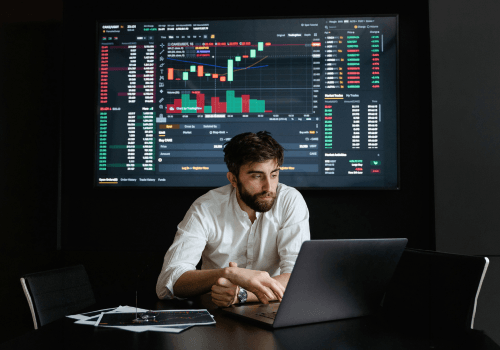
A flagged alert sitting in a queue isn't protection. It's just a record. Without human intervention, nobody reviews it, weighs its context, or decides what to do next, so the detection accomplished nothing beyond logging that something happened. Call it what it actually is: a fast filing cabinet, not a defense system.
This matters because cyber defense implies action. Stopping a breach, isolating a compromised device, revoking access before damage spreads- these are decisions, not detections. A tool can tell you a door was opened. It can't tell you whether to slam it shut, and it definitely won't do the slamming on its own.
Human Analysts Turn Signals Into Decisions
This is where human analysts earn their place in the process. A machine learning signal is a starting point, not a conclusion. An analyst takes that signal, weighs it against context the model doesn't have, like whether that odd login matches a known travel schedule, and decides whether it's noise or a real threat.
AI helps here too, just in a different way. It assists security analysts by breaking down complex threats in language that's easy to follow, turning a sprawling technical alert into something a person can act on quickly. That summary doesn't replace the analyst's judgment. It just gets them to the judgment faster.
How Umetech Pairs AI Cybersecurity Tools With Human Oversight
Most vendors sell AI cybersecurity tools as if the technology handles everything on its own. It doesn't, and it was never built to. Umetech treats AI as one part of a larger system, where human oversight sits at the center of every decision that actually matters.
Who Actually Reads The Alert
AI platforms assume someone is watching the output. That assumption is where a lot of businesses run into trouble, since a tool can generate a flawless alert and still accomplish nothing if nobody's reading it. Umetech's Security Operations Center exists to close that gap.
The SOC staffs the queue around the clock
Our SOC runs 24/7, which means every alert generated by our monitoring tools reaches a person, not a void. Analysts review flagged activity in real time instead of letting it stack up in an inbox nobody checks.
Analysts bring context the model doesn't have
A machine can spot a deviation from normal behavior, but it can't always tell you if that deviation is a threat or just an employee working an odd shift. Our cybersecurity team pairs technical expertise with business context, like schedules, roles, and known travel, which turns a raw flag into a clear decision.
Every alert has a named owner inside our SOC, so nothing sits unassigned. That ownership is what separates a monitored system from a tool that's just quietly logging events nobody sees.
From Detection To Containment
Speed matters once a real threat gets confirmed. This is where automation earns its keep, not by replacing a person's judgment, but by acting the moment that judgment gives it the green light.
Managed Detection and Response acts fast
Once our team confirms a threat, MDR can isolate the affected device and block the malicious activity automatically, cutting off the problem before it spreads across the network. That automated step is part of why our clients see incident response time drop by 70%.
Automation handles the routine work
Routine security tasks, patch verification, log correlation, basic triage, get handled by automated systems so our analysts spend their time on judgment calls instead of repetitive manual checks. That shift in workload is what makes 24/7 cybersecurity operations realistic for a team our size.
Containment buys time. It doesn't replace the follow-up work of figuring out how the threat got in, what it touched, and what needs to change. That part stays firmly in human hands, every time.
Why CISSP Oversight Changes The Design
None of this works without someone accountable for the whole strategy, not just the tools inside it. Every security system Umetech builds gets designed under oversight from our Chief of Security, a CISSP-certified professional, and aligned to established frameworks like NIST, PCI DSS, HIPAA, and SOC 2.
That oversight isn't a formality. Organizations introducing AI into their security stack need actual governance around how these tools get deployed, tuned, and reviewed, or they end up with the alert fatigue problem all over again, just wearing a different name. Our cybersecurity professionals build that governance into our defense strategies from day one, not as an afterthought once something's already gone wrong.
Inside an AI-Powered Cybersecurity Stack That Actually Works
An enterprise security stack has a lot of moving parts. EDR watches endpoints, MDR handles response, anti-phishing tools screen inboxes, and underneath all of these cybersecurity systems sit machine learning models doing the pattern recognition. AI-powered cybersecurity solutions earn their place in this stack by doing specific jobs well, not by acting as some universal fix bolted onto everything at once.
What Machine Learning Is Genuinely Good At
The honest version of this story starts with narrow, well-defined tasks. Machine learning doesn't replace a security strategy; it strengthens specific pieces of one, and knowing which pieces matter.
Phishing detection
AI improves phishing detection by analyzing both the content of an email and the context around it, catching subtle cues a simple keyword filter would miss entirely. A message that looks fine on the surface can still get flagged if the sender pattern or link structure doesn't match what's normal.
Attack sequences
Individual alerts rarely tell the full story on their own, but AI can link separate flags into a single aggregated attack sequence, even when those flags come from different devices or multiple networks. That connection turns a handful of disconnected warnings into one coherent picture of what's actually happening across the network.
Historical data
Machine learning draws on historical attack data to help predict emerging threats before they fully materialize. This isn't a crystal ball; it's pattern matching applied at a scale no analyst could manage by hand.
These are the wins. Enhancing threat detection this way means the technology handles volume and pattern recognition, while the harder judgment calls stay with people.
Baselines, Anomalies, And Insider Threats
Every AI model in this stack starts by learning what normal looks like. That baseline is the entire foundation the rest of the detection work stands on. AI models establish patterns of normal user behavior by watching how people actually work, which systems they touch, what hours they log in, and what files they typically access. Nothing gets flagged as suspicious until the system knows what unremarkable looks like first.
Anomalies surface unauthorized access
Once that baseline exists, AI tools can detect anomalies signaling unauthorized access, like a login from an unfamiliar device paired with access to files that the account never touches. The deviation itself is the signal, not any single action in isolation.
Insider threats get caught by behavior, not intent
The same anomaly detection applies to insider threats, since AI doesn't need to know why someone's behavior changed, only that it did.
A trusted employee accessing sensitive data outside their normal pattern still trips the same alert a compromised outside account would.
The Race Against The Exploit Window
Here's where the math gets genuinely uncomfortable. Newly discovered vulnerabilities get exploited in an average of just 4.76 days, and organizations face thousands of new vulnerabilities every year. That's not a window most security teams can close by hand.
AI compresses the identification timeline
AI can identify previously unseen vulnerabilities and flag them before they're even officially reported, sometimes catching a flaw within hours of it existing. Against a 4.76-day exploit clock, that speed difference isn't a nice bonus; it's the whole game.
Prioritization matters as much as detection
Finding a vulnerability doesn't help much if it lands in a queue behind two thousand others. AI models assist vulnerability management by prioritizing risks based on severity and exploitability, so the flaws most likely to get hit first actually get patched first.
Attack vectors narrow before they open
Faster identification combined with smarter prioritization means the window attackers rely on gets smaller before it ever becomes a real problem. That shrinking window is the practical difference between catching a flaw and reading about it in a breach report.
This is exactly the work built into Umetech's Proactive Cybersecurity Prevention service. It's not a separate AI product tacked onto an existing package; it's woven into the penetration testing, the layered defense stack, and the proactive defense posture we build for every client from the start. The technology does the scanning and the flagging.
AI Cybersecurity Risks: When Threat Actors Have the Same Capabilities
AI cybersecurity risks cut both ways, and that's the part most vendor pitches skip entirely. The same generative models that write a clean incident summary for your SOC can write a flawless phishing email for someone targeting your finance team. Cybercriminals use generative AI to draft messages that read as if they came from a real coworker, no broken grammar, no obvious red flags, just a convincing ask sent at scale. The same technology automates malware development too, building variants designed to evade detection by the very tools watching for them. This is what people mean when they call AI a dual-use technology. Threat actors get the same speed and scale benefits your security team does, and they're not shy about using them.
The threat gets more direct once attackers stop targeting your inbox and start targeting your defenses themselves. Adversarial machine learning lets an attacker probe your security models the way a burglar might test which window doesn't quite lock, sending carefully crafted inputs to figure out exactly what slips under the detection threshold.
Then there are cyber risks that have nothing to do with sophisticated attacks at all. Around 70% of cyberattacks enter through third-party vendors, which means your own defenses can be airtight while a supplier's weak link lets someone straight through. Closing that gap takes real governance, clear policies on what tools staff can use and what data can touch them, continuous monitoring to catch model drift before a system's accuracy quietly degrades, and a Virtual CISO advisory layer that keeps the whole strategy current as future trends take shape, with the cybersecurity generative AI market expected to grow tenfold by 2034. That's oversight a piece of software was never built to provide on its own.
Start With What Your Security Data Already Shows
Every argument in this series comes down to the same point. AI in cyber defense raises the ceiling on what's possible: faster detection, sharper anomaly spotting, quicker containment, but it does nothing for the floor. The floor stays human, staffed, and accountable, no matter how good the model gets. Before evaluating another tool promising to fix that gap, the smarter move is figuring out where your overall security posture actually stands right now. You can't know what a new layer of detection would add if you don't have a clear read on what your current security measures are already catching, and what they're quietly missing.
That's exactly where governance has to start, not with a policy document, but with an honest baseline of what's really happening in your environment. Umetech's Free Basic Network & Cybersecurity Assessment gives you that baseline: a no-cost review of your network architecture, firewall settings, access controls, and existing security controls, so you know precisely what you're working with before you add anything on top of it. It's the practical first step toward real cyber resilience, and the clearest way to protect systems you might currently be misjudging. Book the assessment, and find out what your data's already been trying to tell you.
Common Questions About AI in Cyber Defense
Can AI Replace A Security Team?
No, and that's not a hedge; it's the whole point. AI handles volume and speed well, scanning logs and flagging anomalies faster than any human could. But someone still has to decide what a flagged alert actually means and what to do about it. Cybersecurity talent is crucial to combat AI-driven attacks precisely because attackers are using the same speed advantage, and a queue of unreviewed alerts protects nobody.
Is AI In Cybersecurity Worth It For SMBs?
Yes, when it's paired with people who actually monitor what it flags. AI in cybersecurity helps a small IT team punch above its weight by handling the repetitive scanning work a two- or three-person department could never keep up with manually. The value isn't in the tool alone; it's in what a business does with the extra capacity that tool creates. Skipping the human side of that equation is where SMBs tend to lose the investment's real value.
What Are The Biggest AI Cybersecurity Risks?
The same capabilities that help defenders help attackers. Generative AI writes convincing phishing emails and helps build malware designed to slip past detection tools. There's also the quieter risk of employees pasting sensitive data into public AI tools without realizing what they're exposing. On top of that, models can drift over time, growing less accurate without anyone noticing until something slips through.
How Do Attackers Use AI?
Attackers lean on AI mainly for speed and believability. Generative AI helps them draft phishing messages that read naturally, without the typos or awkward phrasing that used to give scams away. Some use adversarial techniques to probe a target's security models and learn exactly what triggers a response, then adjust their approach to stay under that threshold.
Does AI Reduce Or Increase False Positives?
Done right, AI reduces false positives by learning what normal activity looks like and filtering out the noise that doesn't match real threat patterns. Done wrong, badly tuned thresholds flood a team with alerts until everyone stops reading them entirely, which defeats the purpose.